2026 Best Cryogenic Liquid Tank Options for Safe Storage and Transport?
In the ever-evolving sector of cryogenics, the safety and efficiency of transport and storage are paramount. As Dr. Emily Chen, a leading expert in cryogenic technology, once stated, “Choosing the right Cryogenic Liquid Tank is critical to ensuring safety and maintaining the integrity of cooled gases.” With various options available in 2026, identifying the best tank is essential for operations across multiple industries.
Cryogenic Liquid Tanks are designed to store gases at extremely low temperatures. This ensures that gases remain in liquid form for easier transport. Understanding the materials, insulation, and pressure control in these tanks is crucial. Each tank's design presents unique advantages and challenges. The right choice can prevent accidents and reduce costs, while a poor choice may lead to catastrophic failures.
Amidst advancements, some tanks still fall short of reliability. Continuous innovations often overlook real-world applications. Businesses must weigh options carefully. Selecting the best Cryogenic Liquid Tank requires thorough consideration of specific needs and potential risks. Experts recommend a meticulous assessment to ensure safety and efficiency in operations, as the stakes are high in this specialized field.
Best Cryogenic Liquid Tank Options: Overview of Materials and Design
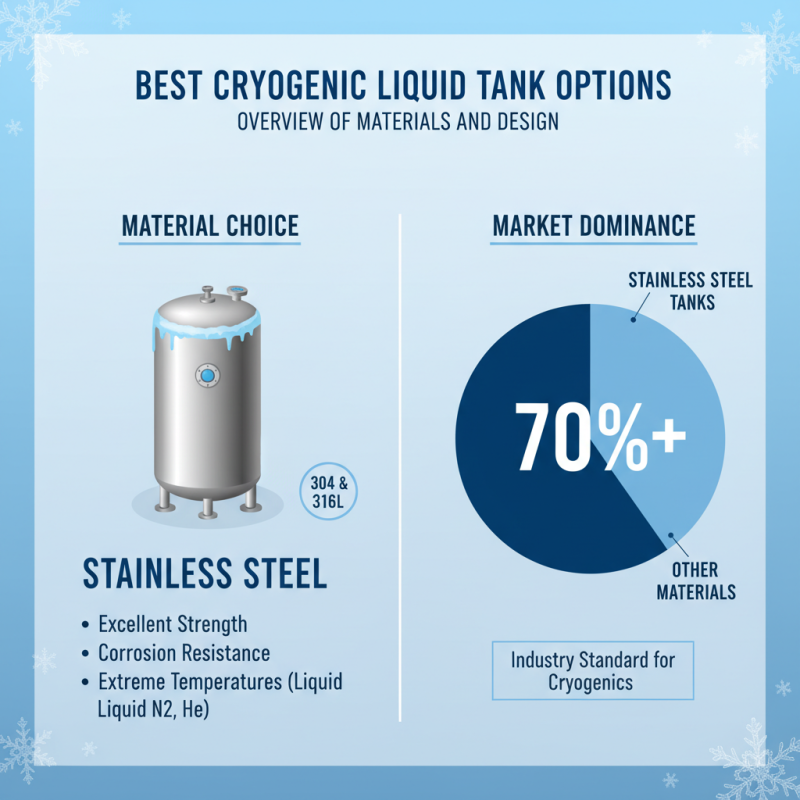
When selecting cryogenic liquid tanks, material and design are paramount. Stainless steel is widely preferred due to its excellent strength and corrosion resistance. This material can withstand extreme temperatures, making it suitable for storing substances like liquid nitrogen or liquid helium. According to industry reports, tanks made of 304 and 316L stainless steel account for over 70% of the market.
The design of the tanks significantly impacts their performance. Vacuum insulation is vital for minimizing heat transfer. This feature reduces the risk of pressure buildup, ensuring safer storage and transport. Research indicates that tanks with multi-layer insulation can maintain cryogenic temperatures effectively for longer periods. However, careful consideration is necessary; improper design may lead to structural failure.
Moreover, tank dimensions can also affect efficiency. Smaller tanks are easier to transport but may require more frequent refilling. Larger tanks reduce transport frequency but come with higher costs. Balancing size, material, and design is crucial. Industry insights reveal that failure to consider these factors can lead to significant safety hazards and inefficiencies in operations.
Key Safety Features in Cryogenic Liquid Tanks for Liquid Storage
When considering the safe storage and transport of cryogenic liquids, key safety features in cryogenic liquid tanks are paramount. These tanks must maintain extremely low temperatures to preserve the integrity of the liquids. Insulation is crucial, with many tanks utilizing vacuum-insulated double walls. The thermal conductivity of the materials used directly affects energy efficiency, with high-performance designs reducing boil-off rates by up to 15%.
Another critical aspect is pressure relief systems. Cryogenic tanks need effective pressure management to prevent explosions. According to industry reports, more than 20% of accidents occur due to failures in these systems. Regular maintenance checks are vital. They help ensure that relief valves function properly and that the tanks remain in good condition.
Safety features can also include alarms and monitoring systems. These technologies provide real-time data on temperature, pressure, and liquid levels. In modern storage setups, smart sensors can enhance reliability significantly. Yet, it's essential to recognize that human error remains a risk. Training operators and implementing strict safety protocols are crucial to mitigate these risks effectively.
Comparative Analysis of Tank Capacity and Dimensions for Transport
When it comes to the safe storage and transport of cryogenic liquids, tank capacity and dimensions play a crucial role. Various studies suggest that the volume of tanks typically ranges from 1,000 to 40,000 liters. The selection of tank size directly affects both logistics and safety protocols. A larger tank may offer increased storage but can complicate handling and transportation.
Capacity decisions must also consider the specific type of cryogenic liquid. For instance, liquefied natural gas (LNG) and liquid oxygen have different density attributes. Reports indicate that a 10,000-liter tank of liquid nitrogen occupies about 8.5 cubic meters. In contrast, the same volume of LNG will occupy approximately 20% less space due to its different physical properties. This discrepancy may lead to underutilization of space in transport vehicles.
Additionally, while larger capacities promise efficiency, they can pose risks in terms of pressure management and thermal control. Incorrect insulation can lead to rapid boiling, increasing internal pressure. Hence, evaluating a tank's dimensions is vital not only for compliance but also for practical operations. Smaller, modular tanks may enhance flexibility but may not be as cost-effective as larger units. Balancing these factors requires careful consideration and expertise in cryogenic technology.
2026 Best Cryogenic Liquid Tank Options for Safe Storage and Transport
| Tank Type |
Capacity (Liters) |
Diameter (mm) |
Height (mm) |
Weight (kg) |
Pressure Rating (bar) |
| Horizontal Cryogenic Tank |
5000 |
1000 |
1500 |
600 |
10 |
| Vertical Cryogenic Tank |
3000 |
800 |
1800 |
500 |
12 |
| Mobile Cryogenic Tank |
1000 |
600 |
1200 |
300 |
8 |
| Cryogenic Tanker Truck |
12000 |
1500 |
3000 |
1500 |
10 |
Industry Standards and Regulations for Cryogenic Liquid Storage Tanks
When it comes to cryogenic liquid storage tanks, compliance with industry standards is crucial. The American Society of Mechanical Engineers (ASME) sets guidelines to ensure safe design and construction. These standards primarily focus on pressure relief systems, material specifications, and weld integrity. According to a report by the International Cryogenic Engineering Committee, around 40% of cryogenic storage tank failures relate to improper adherence to these regulations.
Proper maintenance is also essential. The National Fire Protection Association (NFPA) outlines best practices for inspecting these tanks. Regular checks can prevent leaks and potential hazards. A study published in the Journal of Loss Prevention in the Process Industries noted that 25% of accidents involve inadequate maintenance. Operators must stay aware of potential failure points and adjust their training accordingly.
In the rapidly evolving cryogenic sector, new technologies offer promise. However, not all advancements have proven safe. Emerging materials may not yet meet established safety standards. Systematic reviews indicate that adopting experimental designs without proper testing could lead to failures. It's vital for industry professionals to critically assess innovations and ensure they comply with existing regulations.
Cost-Benefit Analysis of Different Cryogenic Tank Technologies
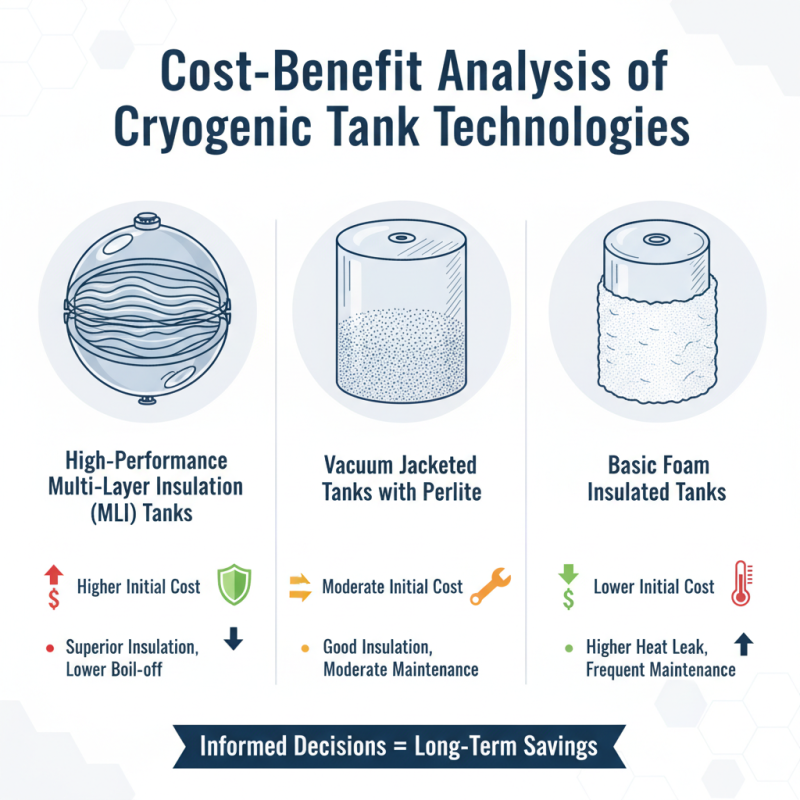
When considering cryogenic liquid tanks, a thorough cost-benefit analysis is essential. Various technologies are available, each with its own advantages and drawbacks. For instance, some tanks may offer better insulation but come at a higher initial cost. Other options might be more affordable but could incur higher maintenance fees. Understanding these differences helps in making informed decisions.
Safety is another critical factor. Tanks with advanced safety features may reduce the risk of accidents, but they might require additional investment. Proper design can prevent catastrophic failures, yet these designs often require more rigorous testing and compliance with safety regulations. Balancing safety and cost can be challenging.
Environmental impact is an increasingly vital consideration. Tanks designed for energy efficiency can reduce long-term operational costs. However, their upfront investment may deter some businesses. Reflecting on the trade-offs between sustainability and costs reveals complex decisions. Careful evaluation of each option ensures responsible choices align with operational needs and budget constraints.