How is Boil-Off Gas Helium Extraction Revolutionizing Industry?
The extraction of helium from boil-off gas is transforming industries worldwide. Boil-Off Gas Helium Extraction offers a novel approach to utilize excess gas from cryogenic processes. This method not only enhances efficiency but also addresses helium shortages in the market.
Helium plays a crucial role in various sectors, including medical imaging and aerospace. As demand for helium increases, innovative extraction techniques are necessary. Boil-Off Gas Helium Extraction is seen as a reliable solution to harness this valuable resource. It provides a way to capture gas that would otherwise be wasted.
The technology is still evolving. Some challenges remain in optimizing the extraction process. Industry leaders must continue refining these methods to maximize output. With continual advancements, this extraction technique could redefine helium sourcing and sustainability. Embracing these innovations can lead to a more secure future for industries relying on helium.

Understanding Boil-Off Gas and Its Role in Helium Extraction
Boil-Off Gas (BOG) plays a crucial role in helium extraction. The gas is a byproduct that occurs during the storage and transport of liquefied helium. When helium is stored at cryogenic temperatures, some of it inevitably evaporates as Boil-Off Gas. This phenomenon presents both challenges and opportunities for industries dependent on helium.
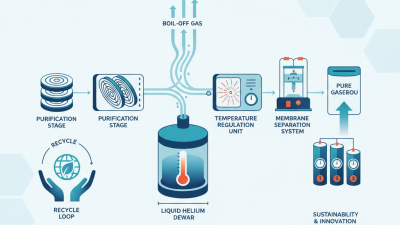
Efficiently capturing this boil-off gas can revolutionize helium extraction processes. Technologies have emerged that allow industries to collect BOG instead of losing it. This collected gas can then be purified and reused, reducing waste. The ability to recycle BOG contributes to a more sustainable helium supply. Companies can extract helium more effectively, which helps meet the rising demand across various sectors.
However, challenges remain. The process of capturing BOG requires specialized technology and skilled personnel. Not all facilities have adopted these methods yet. Training staff and investing in new technologies can be costly. Industries must weigh the benefits against these potential drawbacks to assess the viability of BOG extraction fully.
Technological Innovations in Boil-Off Gas Helium Recovery Systems
Boil-off gas helium recovery systems are changing industrial practices. These technologies capture helium that typically escapes during storage. This process not only conserves helium but also reduces wastage, which is crucial given its finite availability. Industries rely on helium for various applications, from cryogenics to electronics. The ability to recover this gas efficiently can enhance overall productivity.
Recent innovations have focused on improving the efficiency of recovery systems. Advanced techniques utilize refrigeration cycles and separation technologies. These methods help to lower operational costs and increase helium yield. While these systems promise great benefits, they require careful implementation. Organizations must assess their current setups before integrating new technologies. Not all solutions will fit every situation, and ongoing adjustments may be necessary.
There are still challenges to overcome. Not every facility has access to reliable maintenance or trained personnel. Additionally, fluctuating helium prices can impact investment in recovery systems. Industries must weigh these factors when adopting technology aimed at reducing boil-off gas losses. While the potential is significant, ensuring a sustainable approach remains paramount.
Boil-Off Gas Helium Extraction - Industry Impact
This chart illustrates the projected growth in helium recovery from boil-off gas systems over the next five years. The data reflects the increasing efficiency and application of these systems across various sectors.
Industrial Applications of Extracted Helium from Boil-Off Gas
Helium extracted from Boil-Off Gas (BOG) is creating significant advancements across various industries. In 2022 alone, the global helium market was valued at around $4.4 billion, with expected growth driven by new applications. The extraction process allows for a more sustainable supply of helium, responding to growing demands in critical sectors like healthcare and electronics.
In the medical field, helium plays a vital role in MRI machines. Approximately 25% of helium produced goes to this application. As helium becomes scarce, innovative extraction from BOG addresses this challenge. Additionally, the semiconductor industry increasingly relies on helium for cooling and manufacturing processes. Reports indicate that nearly 60% of new helium demand stems from this sector. However, there is a need to reevaluate how efficiently helium is used and managed in these applications.
Still, the transition to BOG extraction is not without its challenges. The technology is evolving, and barriers such as initial costs and efficiencies need consideration. Industries must continuously assess their helium usage and seek alternatives. This ongoing dialogue highlights the importance of sustainable practices and resource management in the face of rising helium demands.
How is Boil-Off Gas Helium Extraction Revolutionizing Industry? - Industrial Applications of Extracted Helium from Boil-Off Gas
| Application Area |
Helium Utilization (%) |
Key Benefits |
Estimated Annual Helium Demand (tons) |
| Cryogenics |
25% |
Cooling superconducting magnets, MRI machines |
400 |
| Semiconductor Manufacturing |
20% |
Plasma etching and deposition processes |
300 |
| Leak Detection |
15% |
Non-toxic and inert for safety |
200 |
| Welding and Cutting |
10% |
Arcing and shielding in high precision processes |
150 |
| Medical Applications |
8% |
For respiratory treatments and medical imaging |
100 |
| Scientific Research |
22% |
Storage and transportation of cryogenic samples |
250 |
| Balloons and Airships |
5% |
Non-flammable lifting gas |
50 |
Economic Impact of Helium Extraction on Industries
The economic impact of helium extraction from boil-off gas is significant. Industries such as healthcare, aerospace, and manufacturing benefit greatly from this resource. Helium is essential for medical imaging and scientific research. According to a report by the U.S. Geological Survey, the global helium market is expected to reach $4.8 billion by 2025. This growth demonstrates helium's critical role in technology and innovation.
However, there are challenges. The extraction process can be costly and environmentally taxing. Companies must consider the sustainability of their operations. A study from the International Helium Association highlighted that 40% of helium used comes from non-renewable sources. This reliance raises concerns about future supply stability.
Moreover, the industry must navigate geopolitical factors affecting helium supply chains. Conflicts in major producing regions can disrupt global availability. A report from a leading market research firm indicates that these disruptions led to a price spike of 135% in 2022 alone. As industries continue to rely on helium, the balance between economic benefit and sustainable practices remains a pressing issue.
Future Trends in Boil-Off Gas Utilization for Helium Production
Boil-off gas (BOG) is emerging as a valuable resource in helium production. Recent studies show that nearly 30% of helium in reservoirs is lost as boil-off gas during storage. This loss represents a significant opportunity for the industry. Capturing this gas can potentially increase helium output by 10-15%. The utilization of BOG is not only practical but essential for sustainable helium production.
In some facilities, systems have been upgraded to capture and process BOG efficiently. A report by the International Helium Association indicates that improved recovery methods have raised extraction rates significantly. This practice aligns with global efforts to reduce waste and maximize resources. However, challenges remain. The technology is still evolving, and not all facilities have adopted these methods.
Future trends indicate that integrating BOG recovery systems will become standard practice. Improved technologies may enhance the capture rate, making it easier for companies to meet growing helium demands. Researchers predict that the global helium market could reach $3 billion by 2025. Capturing BOG could play a crucial role in this growth. Despite the progress, the industry must address the technical and financial barriers that hinder wider adoption of these systems.