How to Choose the Best Cryogenic Refrigeration System for Your Needs?
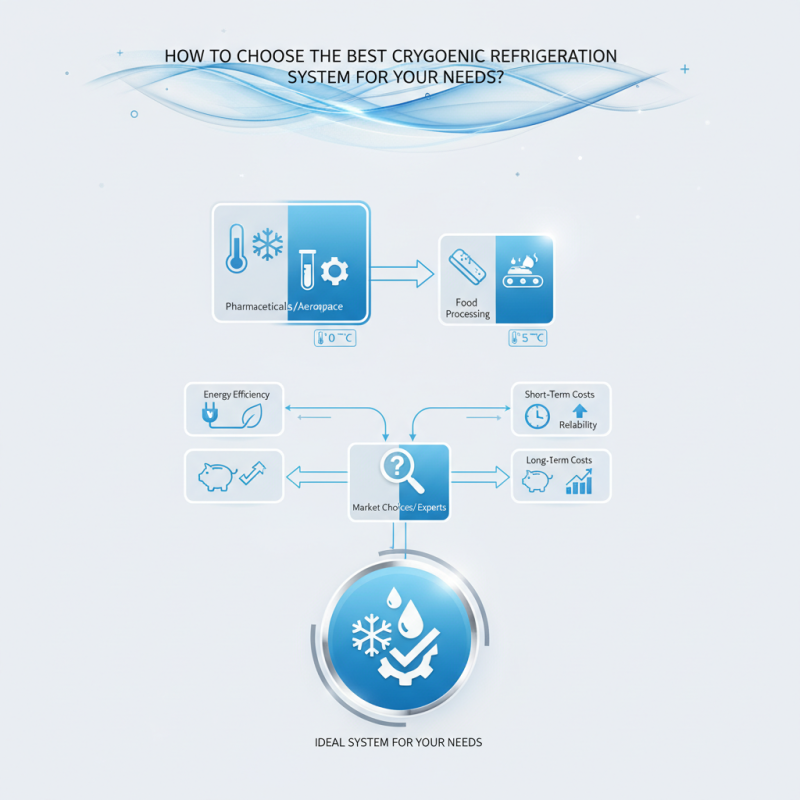
Choosing the right Cryogenic Refrigeration System can significantly influence your operation's success. Cryogenic refrigeration plays a vital role in various industries. These include pharmaceuticals, aerospace, and food processing. With advancements in technology, options abound. However, selecting the most suitable system is still challenging.
There are numerous factors to consider. Understand your specific cooling needs. Consider the required temperature range and the volume of materials you need to store or transport. Each application demands different specifications. It's also essential to evaluate energy efficiency and reliability. While some systems may appear appealing at first glance, they may not provide the required performance in the long run.
In a market flooded with choices, making the right decision can feel overwhelming. Engaging with industry experts can impart valuable insights. It’s crucial to weigh the pros and cons. Consider both short-term and long-term costs. Empirical data may highlight potential issues. Ultimately, a deep understanding of your needs will lead you to the ideal Cryogenic Refrigeration System for your specific applications.
Factors to Consider When Selecting a Cryogenic Refrigeration System
Choosing a cryogenic refrigeration system requires careful consideration of several factors. One key aspect is the intended application. For example, systems designed for medical uses must meet strict regulatory standards. According to a recent market analysis, the global cryogenic refrigeration market is expected to reach $7 billion by 2027, indicating a growing demand.
Efficiency is another critical factor. Assess the energy consumption of potential systems. A system with high efficiency can significantly reduce operational costs. In many cases, optimized systems use approximately 30% less energy compared to older models. However, be mindful of the upfront costs, which can be substantial.
Tips: Evaluate your specific cooling needs before making a purchase. Understand the temperature range required for your applications. Conducting a thorough analysis could save you from future upgrades. Ensure that the system offers reliability under continuous loads, as unexpected failures can disrupt operations severely.
Lastly, maintenance should not be overlooked. Regular service is vital for longevity and optimal performance. A poorly maintained system may lead to inefficiencies and increased downtime. Assess the service support available from providers. Finding a balance between initial costs and long-term reliability is crucial.
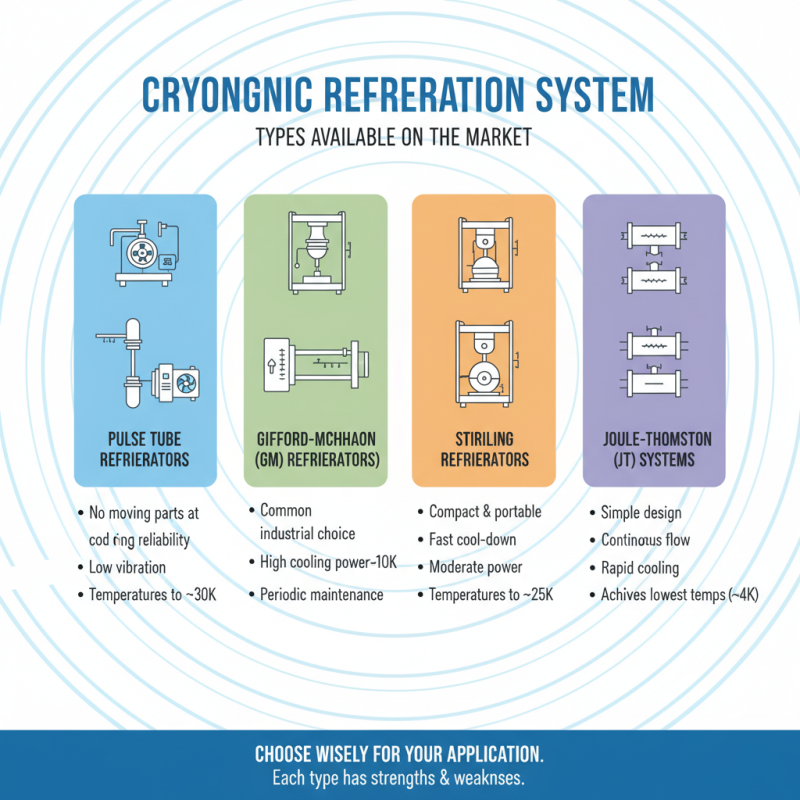
Types of Cryogenic Refrigeration Systems Available on the Market
Choosing the right cryogenic refrigeration system involves understanding the types available. There are several systems designed for specific applications. Each type has its strengths and weaknesses.
One common type is the liquid nitrogen system. It cools efficiently and is widely used in research labs. However, it requires careful handling due to potential hazards. A second type is the closed-cycle refrigeration system. This type recycles the working fluid and is often more energy-efficient. Yet, initial costs can be higher.
**Tips:** Consider your specific needs thoroughly. Assess the cooling capacity required for your tasks. Always prioritize safety features in design. Research the maintenance needs of each system. A poorly maintained system can lead to unreliability and inefficiency.
Another option is hybrid systems, combining different technologies for enhanced performance. While these can be more flexible, they may introduce complexities in operation. Evaluate how often you can manage these complexities.
In the decision-making process, user feedback can be invaluable. Reach out to professionals who have experience with different systems. Their insights can guide you toward a better choice.
Understanding the Cooling Requirements for Your Application
Understanding the specific cooling requirements for your application is crucial when
selecting a cryogenic refrigeration system.
Each application has its unique needs. For example, a laboratory may require precise
temperature control for experiments, while an industrial setup might prioritize
efficiency and capacity. Knowing the temperature range is essential. Some processes
may need temperatures below -150°C, while others may only need -80°C.
Assessing load requirements is equally important. Estimating how much heat must be
removed can dictate system size and design. For instance, large volume operations
often need robust systems, while smaller applications might benefit from compact
solutions.
Continuous operation demands reliability. A system that frequently breaks down can lead
to costly losses. Also, consider your environment.
Is it clean, or does it have contaminants? A dirty environment may increase maintenance needs.
Always reflect on future scalability too. As your needs grow, can the system adapt?
The best choice harmonizes with present and future demands, aligning performance with
your operational goals. Ensure you account for energy efficiency, as increased
operational costs can undermine your budget.
Evaluating Energy Efficiency and Operational Costs
When evaluating energy efficiency and operational costs for cryogenic refrigeration systems, several factors come into play. According to the U.S. Department of Energy, the energy consumption of cryogenic systems can account for up to 60% of their operating costs. This is significant, especially for facilities that rely heavily on low-temperature processes. Users must carefully consider the system's energy use per ton of refrigeration produced. A more efficient system can lead to lower utility bills and reduced environmental impact.
Operational costs don’t stop at energy consumption. Maintenance and potential downtime must also be factored into the equation. A report by the International Institute of Refrigeration highlights that routine maintenance can reduce operational failures by 30%. However, acquiring a system with high initial capital costs may improve longevity and efficiency. Many users overlook this factor, focusing solely on upfront costs rather than long-term savings.
The choice of refrigerants also impacts energy efficiency. Some newer refrigerants have lower global warming potential and can enhance system performance. Yet, they may require new equipment or modifications. Balancing initial investment against future operational costs can be challenging. Every situation is unique and requires careful thought. These variables must guide decision-making, ensuring that the chosen system meets individual needs while remaining financially viable.
Energy Efficiency and Operational Costs of Cryogenic Refrigeration Systems
Importance of Manufacturer Support and Maintenance Options
Choosing the right cryogenic refrigeration system involves considering not just the specifications but also the support from the manufacturer. Effective maintenance options are critical for performance. According to the International Journal of Refrigeration, systems with strong manufacturer support tend to have lower failure rates and longer life spans. A comprehensive maintenance plan can significantly reduce operational costs and downtime.
Tips: Always inquire about the availability of service contracts. Look for comprehensive training for your staff. Consider manufacturers that provide 24/7 support for urgent issues.
Lack of proper maintenance can lead to equipment failures. It is essential to address problems before they escalate. Regular check-ups, including inspections and system cleans, will enhance reliability. Furthermore, Manufacturer-led training sessions improve user competency and understanding of system intricacies, which can prevent costly mistakes.
Tips: Schedule regular maintenance checks. Invest in user training sessions. Document all maintenance activities for future reference.
Understanding the implications of poor support choices is equally important. Systems without solid manufacturer backing may lead to costly repairs and inefficiencies. An informed decision in selecting a reliable manufacturer can prevent future regrets. The right support ensures longevity and optimal performance, aligning with industry standards.
How to Choose the Best Cryogenic Refrigeration System for Your Needs?
| Feature |
Option 1 |
Option 2 |
Option 3 |
| Cooling Capacity (kW) |
50 |
100 |
150 |
| Temperature Range (°C) |
-150 to -90 |
-150 to -100 |
-150 to -110 |
| Power Supply (Volts) |
380 |
400 |
480 |
| Support Duration (Years) |
3 |
5 |
7 |
| Maintenance Frequency (Months) |
6 |
12 |
24 |