How to Choose the Right Cryo Refrigerator for Your Needs?
Choosing the right Cryo Refrigerator can seem daunting. There are many factors to consider. Your specific needs will guide this choice.
A Cryo Refrigerator is key for preserving biological samples. It ensures temperature stability for sensitive materials. Features like size, capacity, and energy efficiency can vary widely.
Many users overlook essential features. For example, a unit's insulation directly affects energy consumption. Some might prioritize a lower price, forgetting about long-term costs. Reflecting on your needs will help you avoid common pitfalls.
Understanding Different Types of Cryo Refrigerators Available in the Market
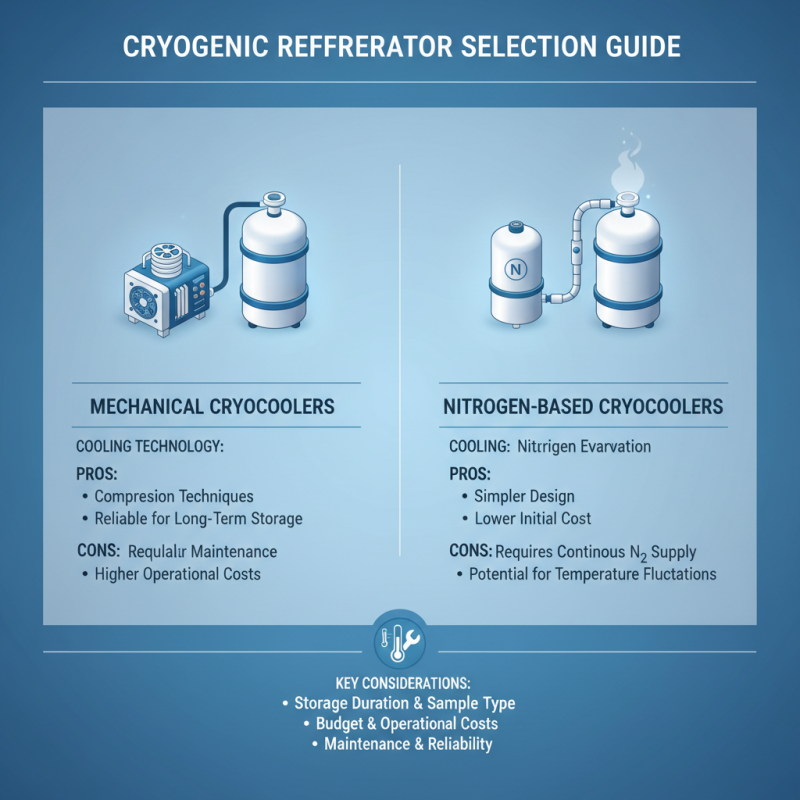
When selecting a cryo refrigerator, understanding the different types available is crucial. Cryo refrigerators fall into various categories based on their cooling technology. For instance, there are mechanical models that utilize compression techniques. They tend to be more reliable for long-term storage. However, they may require regular maintenance, which can lead to higher operational costs over time.
Another common type is the cryogenic dewar. This model is often favored for its portability. It uses liquid nitrogen to keep samples at extremely low temperatures. While it’s efficient and effective, users must frequently refill it. This could be inconvenient for those needing consistent low temperatures without interruptions.
Lastly, there are advanced cryo freezers that offer digital controls. These models allow precise temperature settings. They can also include alarm systems to alert users of any potential issues. However, with such features comes increased complexity. Users need to be familiar with the technology to avoid mishandling. Each type has its pros and cons, and it’s vital to reflect on specific needs before making a choice.
Key Features to Consider When Selecting a Cryo Refrigerator
When selecting a cryo refrigerator, there are several key features to keep in mind. The temperature range is crucial. You need to know what temperatures are required for your specific applications. Some units may reach extremely low temperatures, while others may not. Consider how often you will need to adjust the temperature. This can impact your workflow significantly.
The size and capacity matter, too. A unit that is too small may limit your storage options. Conversely, a unit that is unnecessarily large can waste energy. Think about the space available in your facility. It can be tricky to fit large equipment into tight areas. Additionally, consider the insulation and energy efficiency. Poor insulation can lead to rising energy costs and inconsistent temperatures.
Another feature to examine is the usability of the control interface. Some models come with complex controls that can be confusing. A simple and intuitive interface can save time and reduce frustration. Don't overlook the importance of safety features. Alarms for temperature fluctuations can provide peace of mind. Reflecting on these aspects can guide your decision effectively.
Comparison of Key Features in Cryo Refrigerators
Assessing Your Specific Cooling Requirements and Applications
When choosing a cryo refrigerator, understanding your specific cooling requirements is essential. Not every application demands the same temperature range. For example, while some labs require temperatures around -80°C for long-term biological preservation, others may only need -20°C for short-term storage. According to a 2022 report from the International Cryogenic Society, nearly 40% of laboratories reported mismatches between their cooling systems and storage needs, leading to product compromise.
Consider the volume of samples you handle. A facility processing larger quantities often needs higher capacity units. The same report highlighted that refrigerators with capacities exceeding 500 liters are becoming increasingly popular. These models can accommodate diverse applications, from storing vaccines to managing sensitive electronic components. However, energy consumption is a growing concern. Researchers found that cryogenic systems can consume up to 30% more energy than expected, which raises operational costs.
Evaluate the ease of maintenance and reliability. Regular maintenance is crucial, yet many facilities overlook this. Cryo refrigerators with integrated monitoring systems provide real-time data, but they may come with a steep learning curve. A survey indicated that more than 25% of users faced difficulties in fully utilizing these advanced features. Balancing efficiency, capacity, and operational costs can be challenging, but careful assessment can lead to a successful purchase.
Evaluating Energy Efficiency and Cost-Effectiveness of Cryo Refrigerators
When choosing a cryo refrigerator, energy efficiency is paramount. A unit that consumes less energy can significantly reduce operational costs. Look for models with high energy ratings. These systems often have better insulation, which helps maintain low temperatures without excessive power demands.
Cost-effectiveness is another crucial factor to consider. Initial purchase price is important, but ongoing costs matter even more. Regular maintenance can add to expenses. Sometimes, cheaper units may have higher repair needs. Reflect on the total cost of ownership over several years instead of just the upfront payment.
Evaluate your unique requirements. Consider the volume of materials to be stored. Smaller units may suffice for limited use. However, larger operations may need industrial-sized options. Analyze potential scenarios where capacity limits could affect your workflow. This reflection can reveal hidden costs or savings.
How to Choose the Right Cryo Refrigerator for Your Needs?
| Model |
Temperature Range (°C) |
Energy Efficiency Class |
Annual Energy Consumption (kWh) |
Cost ($) |
| Model A |
-196 to -80 |
A++ |
150 |
4500 |
| Model B |
-150 to -40 |
A+ |
200 |
3800 |
| Model C |
-150 to -60 |
B |
250 |
3200 |
| Model D |
-200 to -70 |
A+++ |
100 |
5000 |