What is a Cryogenic Dewar and How Does It Work?
Cryogenic Dewars are essential in various fields, including medicine and research. They serve as highly efficient containers for storing liquefied gases. According to a recent report by the National Institute of Standards and Technology, the demand for cryogenic storage solutions is growing annually by 6%. This trend is driven by advancements in fields like superconductivity and cryobiology.
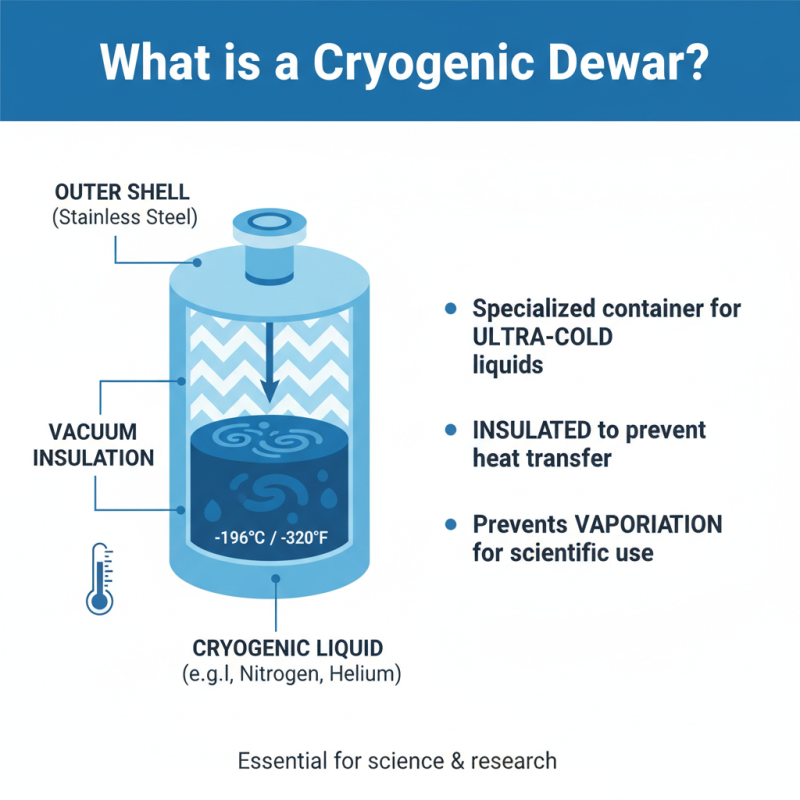
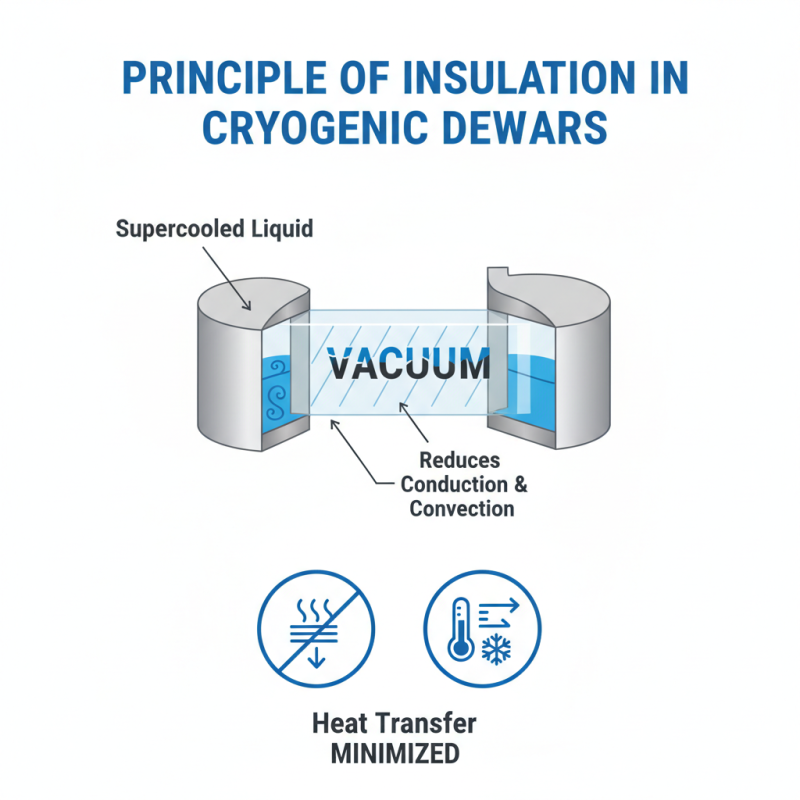
A Cryogenic Dewar minimizes thermal exchange. Designed with double walls, it uses vacuum insulation to keep contents cold. Typically, these Dewars are used for storing liquid nitrogen or helium at temperatures below -196°C. Their efficiency is critical for laboratories and medical facilities that require precise temperature management.
However, the technology is not without challenges. Maintenance is crucial for optimal performance. Even minor dents can impact insulation quality. Users must remain vigilant about monitoring temperature and pressure. Despite these potential issues, the widespread adoption of Cryogenic Dewars indicates a promising future, reflecting an ongoing need for reliable cryogenic storage solutions.
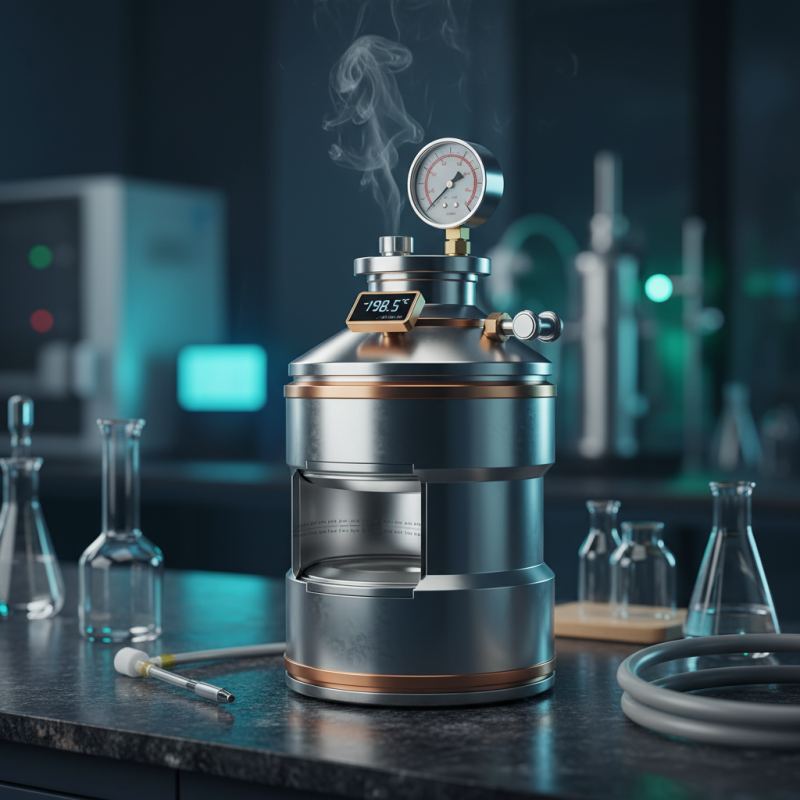
What is a Cryogenic Dewar?
A cryogenic Dewar is a specialized container that stores liquids at extremely low temperatures. Typically made from materials like stainless steel, these containers are insulated to minimize heat transfer. The insulation is vital for maintaining low temperatures and preventing vaporization of the stored cryogenic liquids. Such liquids include nitrogen and helium, which are crucial in many scientific applications.
In recent studies, the global cryogenics market is projected to reach $30 billion by 2025. This growth largely stems from the increasing use of cryogenic technology in industries such as medical and aerospace. Cryogenic Dewars play a critical role in these sectors by preserving biological samples and supporting superconductor technologies. For example, a typical Dewar can maintain liquid nitrogen's boiling point of -196°C, critical for various research fields.
However, despite their advantages, cryogenic Dewars have limitations. For instance, these containers can be heavy and cumbersome to transport. Users also need to monitor liquid levels carefully to avoid evaporation. There is an ongoing debate within the industry regarding the best materials and designs for maximizing efficiency. While many improvements have been made, attaining optimal thermal performance remains a challenge. This complexity invites further exploration and innovation within the field.
History and Development of Cryogenic Dewars
Cryogenic Dewars have a fascinating history. In the early 20th century, scientists sought ways to store gases like liquid nitrogen and helium. The goal was simple: create a vessel that could keep substances cold for long periods. One of the first successful designs was introduced by the renowned physicist James Dewar in 1892. His innovation used double-walled glass, which minimized heat transfer. This design became the foundation for modern Dewars.
As cryogenic applications grew, improvements followed. Insulation became crucial. By the 1960s, manufacturers switched to vacuum-sealed metal constructions. These vessels were more durable. They effectively stored gases and liquids at extremely low temperatures. Scientists in various fields, including space research, benefited greatly. They relied on Dewars for experiments and storage.
Yet, challenges still arise. Many Dewars are bulky and heavy, making transportation difficult. Their fragile nature can lead to breakage, especially in harsh conditions. There's room for innovation here. Designing lighter and more robust Dewars could open new possibilities. Researchers continue to explore ways to enhance efficiency and usability. The evolution of cryogenic Dewars is ongoing.
What is a Cryogenic Dewar and How Does It Work? - History and Development of Cryogenic Dewars
| Dimension |
Value |
| Material |
Aluminum, Stainless Steel, Glass |
| Common Uses |
Storage of Liquid Nitrogen, Helium, Oxygen |
| Insulation Type |
Vacuum Insulation |
| Temperature Range |
-196°C to -273°C |
| Inventor |
James Dewar |
| Year of Invention |
1892 |
Applications of Cryogenic Dewars in Various Fields
Cryogenic Dewars are essential in many fields. These containers store liquefied gases at extremely low temperatures. In the medical field, Dewars are used to store biological samples. Cells, tissues, and even organs can be preserved effectively. The low temperatures slow down cellular processes, maintaining sample integrity.
In research, Dewars play a vital role in experiments involving superconductivity. Scientists use these containers to keep materials at necessary temperatures. This is crucial for observing unique phenomena. Furthermore, in the aerospace industry, cryogenic fuels are stored in Dewars. The efficiency of rockets can depend on how well these fuels are preserved.
However, using Dewars involves challenges. Precise control of temperature is essential. Any mismanagement can lead to disastrous results. They also require safe handling practices to prevent accidents. The design can be improved to make them lighter and more durable. Balancing efficiency with usability remains a point for reflection.
Cryogenic Dewar Applications in Various Fields
Maintenance and Safety Considerations for Cryogenic Dewars
Cryogenic Dewars are critical in numerous industries. Proper maintenance and safety are paramount to their effectiveness. Regular checks of the insulation are essential. A common issue arises when users neglect to inspect the outer surface for damage or wear. Replacement of damaged parts can improve performance and safety.
Tips: Always perform weekly inspections. Look for cracks or dents on the Dewar. This simple step can prevent larger issues later.
Safety measures must be taken seriously. Personal protective equipment is crucial. Wearing gloves and goggles reduces the risk of serious injuries. According to a 2022 safety report, over 30% of accidents with cryogenic liquids involved inadequate personal gear. Users must be aware of the vacuum and pressure levels. It’s crucial to ensure that the Dewar is safely vented during storage.
Tips: Keep a safety checklist nearby. Regularly review safety protocols with all staff involved in handling Dewars. This practice will help maintain a safe working environment.