What is a Super Cryogenic Refrigerator and How Does it Work?
The Super Cryogenic Refrigerator is a remarkable innovation in cooling technology. It reaches extremely low temperatures, far below the freezing point of water. This advanced device manipulates gases and utilizes a unique refrigeration cycle. It effectively cools materials, making it essential in various industries.
In the realm of scientific research, the Super Cryogenic Refrigerator plays a crucial role. It aids in preserving delicate samples and materials by preventing thermal degradation. The precise control of temperatures allows scientists to conduct experiments with minimal interference. Yet, some may question its accessibility. The technology is complex, and costs can be prohibitive.
Understanding the workings of a Super Cryogenic Refrigerator invites contemplation. How does it achieve such low temperatures? What challenges arise in maintenance and operation? Embracing these questions enhances our appreciation of this sophisticated technology. It reminds us of the ongoing need for innovation and improvement in our approach to cooling solutions.
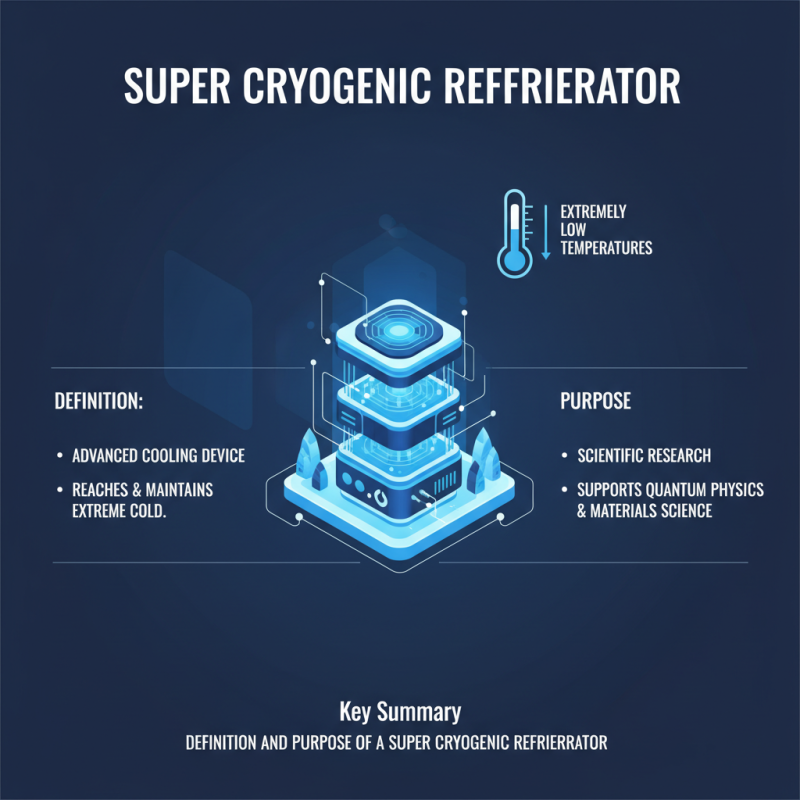
Definition and Purpose of a Super Cryogenic Refrigerator
A super cryogenic refrigerator is an advanced cooling device. Its primary purpose is to reach and maintain extremely low temperatures. These devices are often used in scientific research. They support experiments in quantum physics and materials science.
The definition of a super cryogenic refrigerator involves cooling down to temperatures below -150°C. This process allows for various materials to become superconductive. At such low temperatures, resistance in superconductors vanishes. However, achieving these temperatures can be complex. The technologies used often require precision and expertise.
The operation of these refrigerators usually involves helium as a cooling agent. Helium remains liquid at lower temperatures, allowing efficient heat transfer. Users might find that managing these systems can be challenging. There is a need for regular maintenance to ensure reliability. Some users may overlook the importance of monitoring temperature fluctuations.
Key Components of a Super Cryogenic Refrigerator
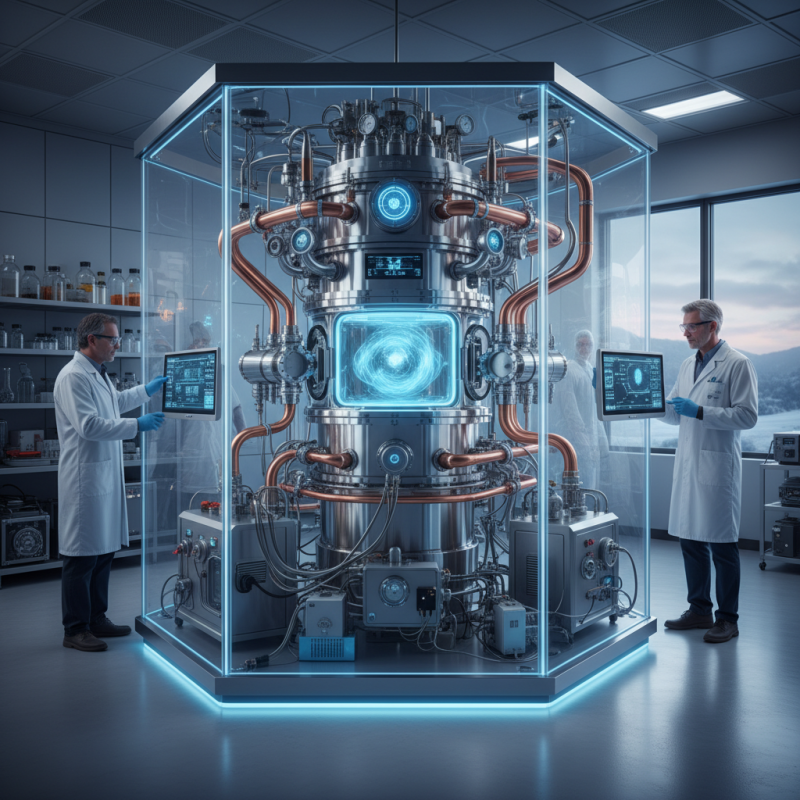
Super cryogenic refrigerators are designed to achieve extremely low temperatures for various applications. The key components of these systems play a significant role in their functionality and efficiency. One main part is the cryogenic chamber, which houses the materials that need to be cooled. This chamber is built with materials that can withstand extreme cold without breaking down.
Another essential component is the refrigeration unit itself. This unit operates using advanced thermodynamic principles. It typically employs a closed-loop system that cools down a refrigerant. The refrigerant absorbs heat from the cryogenic chamber and circulates to remove it. This cycle continues until the desired temperature is reached.
Insulation is also critical. Proper insulation minimizes heat transfer and ensures efficiency. Materials such as vacuum insulation or multi-layer insulation are often used to prevent external warmth from interfering with the cryogenic process. Designers sometimes face challenges in balancing insulation thickness with space and weight constraints. Each new design iteration brings insights but also reflects the complexities that come with maintaining super low temperatures.
Operation Mechanism of Super Cryogenic Refrigerators
Super cryogenic refrigerators operate based on advanced cooling principles. These systems can achieve temperatures below -150°C. The operation relies on the principles of cryogenics and thermodynamics. A key component is the cryogenic fluid, often liquid helium or nitrogen. These fluids absorb heat effectively. When they evaporate, they cool the surrounding area.
The super cryogenic refrigerator is designed for efficiency. Reports suggest they can achieve cooling efficiency rates of up to 80%. This is significant for applications in research, like particle accelerators. The mechanics involve complex heat exchangers. They ensure effective heat transfer. The design must minimize thermal losses, which can be challenging in tightly constrained environments.
However, the technology is not without flaws. Issues like thermal leaks can hinder performance. Users often report difficulty in maintaining desired temperatures. Maintenance can be labor-intensive, leading to downtime. Despite these challenges, the benefits of super cryogenic refrigerators are considerable in scientific research and industrial applications. Their ability to sustain extremely low temperatures opens doors to numerous possibilities.
Cooling Performance of Super Cryogenic Refrigerators
Applications in Science and Industry
Super cryogenic refrigerators are crucial in various scientific and industrial applications. They can reach temperatures below 10 Kelvin. This extreme cooling enables scientists to study materials that behave differently at such low temperatures. For instance, quantum computing relies on these refrigerators to maintain superconducting qubits. A report from the International Cryogenics Society noted a 30% increase in research using cryogenic technologies in recent years.
In the medical field, super cryogenic refrigerators play a vital role. They help preserve biological samples, including stem cells and vaccines. According to the World Health Organization, maintaining vaccine integrity requires storage at ultra-low temperatures to avoid degradation. This has pushed the demand for advanced cryogenic systems in hospitals and laboratories. Furthermore, the aerospace sector uses them to test materials under extreme conditions. Research shows that the aerospace industry intends to invest over $500 million in cryogenic technology by 2025.
Despite their importance, challenges remain. The high energy consumption of super cryogenic refrigerators draws attention. Some reports suggest they can use up to 15% more energy than traditional cooling systems. Innovations are ongoing, but energy efficiency in cryogenic refrigeration needs improvement. Finding the balance between performance and sustainability is a critical area for future research.
Advantages and Limitations of Super Cryogenic Refrigerators
Super cryogenic refrigerators are notable for their ability to achieve extremely low temperatures. They are essential in various fields, including scientific research and space exploration. However, they come with both advantages and limitations.
One major advantage is their efficiency. According to a report by the International Institute of Refrigeration, super cryogenic refrigerators can reach temperatures below -150°C with less energy consumption compared to traditional systems. This efficiency is critical in sectors like particle physics, where precise temperature control is necessary. Another keen benefit is their compact design. Many super cryogenic units are designed to be space-efficient, which is crucial in laboratories and research facilities with limited room.
Despite their benefits, there are drawbacks. The initial cost of super cryogenic refrigeration systems is significantly higher than conventional models. A market analysis presented by the Global Strategic Alliance indicates that consumers could see costs exceed 30% of traditional systems. Maintenance can also be complex. Many users report challenges in upkeep, as these systems require specialized knowledge. Energy consumption at higher operating levels may also lead to higher costs over time.
Tip: Regular maintenance checks can prevent significant failures. Keep an eye on temperature stability. Investing in training for staff can improve effectiveness when operating complex systems.
What is a Super Cryogenic Refrigerator and How Does it Work? - Advantages and Limitations of Super Cryogenic Refrigerators
| Feature |
Details |
| Operating Temperature Range |
Below 10 Kelvin |
| Cooling Mechanism |
Uses helium gas, which transitions to a liquid state |
| Applications |
High-energy physics, space exploration, and medical technologies |
| Energy Efficiency |
High efficiency compared to traditional refrigeration methods |
| Size and Portability |
Typically large and stationary, not easily portable |
| Cost |
High initial investment and operational costs |
| Limitations |
Not suitable for all applications due to size and cost |