Air separation units are the quiet engines behind oxygen, nitrogen, and argon production. They support hospitals, steel mills, chemical plants, food processors, and semiconductor facilities. The International Energy Agency reported that global hydrogen demand reached almost 100 million tonnes in 2023. Most hydrogen production still depends on fossil fuels, increasing pressure for cleaner and more efficient industrial systems. This shift makes reliable gas infrastructure increasingly important.
Choosing an Air Separate Unit Provider requires more than comparing equipment prices. Buyers should examine oxygen purity, nitrogen capacity, argon recovery, energy consumption, turndown performance, and plant availability. The U.S. Department of Energy’s Industrial Decarbonization Roadmap identifies industrial process efficiency and electrification as key emissions-reduction opportunities. For an ASU, even a small specific-power difference can create significant annual savings. A plant running continuously leaves little room for weak maintenance support.
Real operating conditions matter. A coastal steel plant may face humid air, salt exposure, and unstable power. A hospital needs dependable oxygen delivery, clear alarms, and rapid service response. A semiconductor facility may require extremely high nitrogen purity and carefully controlled pressure. Linde and Air Liquide annual reports also show how major industrial-gas providers compete through integrated production, distribution, and service networks.
No ranking is perfect. A large supplier may not suit a remote project. A smaller specialist may offer faster engineering support but fewer spare-parts locations. This Top 10 comparison therefore considers technical capability, lifecycle cost, safety culture, delivery experience, and documented customer support. The strongest provider is not always the cheapest one. It is the partner that performs reliably when the process cannot stop.
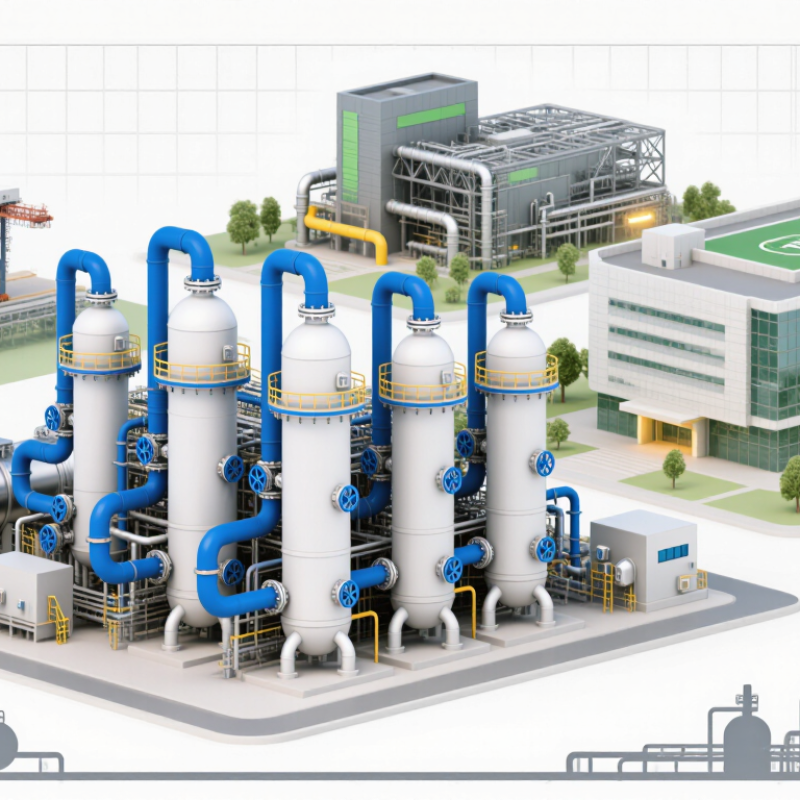
An air separator unit removes trapped and dissolved air from hydronic heating and cooling systems. It protects pumps, valves, heat exchangers, and pipework from noise and corrosion. The unit usually sits near the system’s high-temperature point, often close to the heat source. Water enters the chamber and slows down. Internal coalescing elements gather tiny bubbles into larger bubbles. These bubbles rise and leave through an automatic air vent.
The process is simple, but installation details matter. Correct sizing depends on flow rate, operating pressure, temperature, and connection size. A reliable provider should supply tested performance data, material specifications, pressure ratings, and clear maintenance instructions. Experience also matters. Poor placement can reduce separation efficiency, even when the equipment appears well made. This is easy to overlook. A separator may remove air, but it does not replace water treatment or remove all system dirt unless designed for both functions.
Tips: Check the system design before comparing the top 10 air separator unit providers. Ask how the unit performs at low flow rates and changing temperatures. Confirm vent capacity and replacement-part availability. Review independent testing where possible. Consider installation space, insulation, drainage, and service access. A transparent supplier will explain limitations, not promise perfect results. Photographing the pipe layout before ordering can prevent an expensive size mistake.
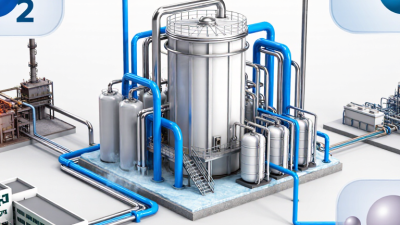
Air separator units remove trapped air, suspended bubbles, and sometimes dirt from circulating fluids. They are common in hydronic heating, chilled-water systems, and industrial cooling loops. A properly selected unit can reduce pump noise, corrosion, uneven heating, and repeated manual venting. In a plant room, the difference may appear as steadier pressure and cleaner sight glasses.
Different applications require different designs. Centrifugal separators suit larger water systems with continuous flow. Coalescing separators capture fine bubbles and work well where air removal must be precise. Vortex models create controlled turbulence, separating air without excessive pressure loss. Magnetic separators add a collection chamber for metallic debris, which benefits systems using steel components. For compressed air, moisture separators and filter-separator units handle condensate and solid particles instead.
Selection should begin with flow rate, pipe size, operating temperature, pressure, and fluid chemistry. Installation position matters too. Many hydronic units perform best near the point of lowest pressure, often close to the circulation pump inlet. Check drain access and maintenance clearance before approving a design. Small details matter.
When comparing the top ten providers, examine test data, material certificates, replacement parts, and service response. A lower purchase price can hide difficult cleaning or costly downtime. I have seen specifications look impressive while ignoring real operating conditions. That mistake deserves careful review. Ask for performance data at your actual flow range, not only at ideal laboratory conditions.
Top 10 Air Separator Unit Providers Compared
Comparing ten leading air separator unit providers requires more than checking capacity. Cryogenic systems suit large, continuous plants. Pressure swing adsorption can fit smaller, variable-demand facilities. MarketsandMarkets reported that the global air separation plant market was valued at about USD 5.2 billion in 2023. It also forecasts steady growth through 2028, driven by steel, chemicals, healthcare, and energy projects.
The strongest provider profiles usually combine high-purity oxygen, nitrogen, or argon with proven operating data. Energy performance matters greatly. Industrial benchmarks commonly place cryogenic oxygen production near 200–250 kWh per metric ton, depending on scale and process design. In practice, I would compare guaranteed power consumption, startup time, turndown range, maintenance access, and spare-part response. A low purchase price can become expensive beside a compressor running every hour.
The ten compared provider types show different strengths: large engineering groups often deliver complex turnkey plants; specialist manufacturers may offer faster modular systems; regional integrators can provide closer field support. The International Energy Agency highlights efficiency and system integration as important factors in industrial decarbonization. That makes heat recovery and oxygen integration worth examining. However, published performance figures are not always measured under identical conditions. This is easy to overlook. Request test protocols, feed-air assumptions, purity tolerances, and five-year service costs before ranking any supplier. A smaller unit may also outperform a larger one when demand changes frequently.
| Rank | Provider Profile | Primary Separation Technology | Typical Flow Range | Typical Pressure Range | Common Materials | Key Applications | Customization Capability | Documentation & Compliance | Best-Fit Buyer | Overall Score |
|---|---|---|---|---|---|---|---|---|---|---|
| 1 | Profile 01 Large industrial systems |
Vortex and coalescing separation | 500–20,000 m³/h | Up to 40 bar | Carbon steel, stainless steel | Process air, power generation, petrochemical plants | High; engineered-to-order designs | Pressure-vessel drawings, material certificates, performance data | Large plants requiring engineered packages | ★★★★★ 9.4/10 |
| 2 | Profile 02 Energy-efficient systems |
High-efficiency centrifugal separation | 300–15,000 m³/h | Up to 30 bar | Carbon steel, 304/316 stainless steel | Compressed-air networks, manufacturing, utilities | High; multiple connection and drain options | Dimensional drawings, installation manuals, test records | Facilities prioritizing low pressure drop | ★★★★★ 9.1/10 |
| 3 | Profile 03 Modular packages |
Multi-stage cyclone and mesh-pad separation | 200–12,000 m³/h | Up to 25 bar | Painted carbon steel, stainless steel | General industry, HVAC plants, food processing | Medium to high; skid-mounted options | Operating specifications, maintenance schedules, spare-parts lists | Buyers needing scalable capacity | ★★★★☆ 8.8/10 |
| 4 | Profile 04 Compact units |
Coalescing filter and centrifugal pre-separation | 50–5,000 m³/h | Up to 16 bar | Aluminium, carbon steel, stainless steel | Workshops, small factories, instrument air | Medium; standard configurations are common | Product datasheets, pressure ratings, replacement-element data | Small and medium compressed-air systems | ★★★★☆ 8.5/10 |
| 5 | Profile 05 Corrosion-resistant systems |
Stainless centrifugal and vane separation | 100–8,000 m³/h | Up to 25 bar | 304L/316L stainless steel | Chemical processing, marine service, washdown areas | High; hygienic and corrosion-resistant configurations | Material traceability, weld documentation, surface-finish data | Harsh or corrosive operating environments | ★★★★☆ 8.4/10 |
| 6 | Profile 06 Oil-removal focus |
Coalescing separation with demister stage | 30–4,000 m³/h | Up to 16 bar | Aluminium, carbon steel, stainless steel | Oil-injected compressors, pneumatic equipment, workshops | Medium; emphasis on filtration stages | Filter-efficiency data, element-change guidance, pressure-drop curves | Applications requiring cleaner compressed air | ★★★★☆ 8.2/10 |
| 7 | Profile 07 High-temperature service |
Inertial and cyclone separation | 150–10,000 m³/h | Up to 20 bar | Carbon steel, heat-resistant stainless steel | Dryers, furnaces, thermal processing, engine air systems | High; temperature-rated components available | Temperature limits, pressure-drop data, inspection documentation | Systems with elevated inlet temperatures | ★★★★☆ 8.0/10 |
| 8 | Profile 08 Food and pharmaceutical service |
Sanitary centrifugal and coalescing separation | 25–3,000 m³/h | Up to 16 bar | 316L stainless steel, sanitary elastomers | Food production, beverage lines, pharmaceutical plants | High; sanitary connections and polished surfaces | Hygienic design data, material certificates, cleaning guidance | Regulated processes with sanitation requirements | ★★★★☆ 7.9/10 |
| 9 | Profile 09 Fast-delivery systems |
Standard centrifugal separation | 40–6,000 m³/h | Up to 16 bar | Aluminium, carbon steel | Replacement projects, general manufacturing, utilities | Low to medium; stocked standard models | Standard datasheets, connection drawings, operating instructions | Projects with short purchasing schedules | ★★★☆☆ 7.6/10 |
| 10 | Profile 10 Budget-oriented systems |
Basic cyclone or vane separation | 20–2,500 m³/h | Up to 10 bar | Carbon steel, aluminium | Light industrial use, low-demand utility air | Low; primarily catalog-based products | Basic specifications, installation instructions, spare-parts information | Cost-sensitive projects with moderate duty cycles | ★★★☆☆ 7.2/10 |
Choosing among top air separator unit providers requires more than comparing catalog airflow rates. Evaluate quality under the conditions your system will actually face. Ask for tested separation efficiency at the target flow, pressure, temperature, and particle range. A unit that performs well in a laboratory may struggle when dust loads rise. Check the test method, sample size, and test date. Independent reports are stronger than unsupported claims. Still, paperwork can miss field realities.
Inspect construction details closely. The housing should resist corrosion and vibration, while seals must remain stable during repeated cleaning. Examine welds, access doors, gaskets, inspection windows, and drain points. Measure pressure drop across the separator at several airflow levels. High pressure loss increases fan energy and may reduce downstream performance. Confirm that rated capacity leaves operating margin during startup and seasonal peaks. Ask how quickly screens, filters, or collection chambers can be serviced. Minutes matter.
Performance also includes reliability after installation. Request references from facilities with similar airflow and contaminant conditions. Review maintenance logs, replacement intervals, noise readings, and unplanned shutdowns. A useful acceptance test should record inlet and outlet particle levels, airflow, pressure, and power consumption. Repeat measurements after several weeks. Early results can look impressive. Long-term stability is harder. Ask about calibration procedures and operator training. One weakness remains common: buyers sometimes select the smallest unit to reduce purchase cost. That choice can create costly pressure loss later.
Choosing the right air separator unit provider starts with system evidence, not a polished catalog. Confirm flow rate, operating pressure, fluid temperature, pipe size, and connection type. A provider should supply tested separation performance, pressure-drop data, material specifications, and installation guidance. Ask whether testing follows recognized HVAC standards, such as ASHRAE recommendations for hydronic system design.
Energy performance also matters. The International Energy Agency reports that buildings consume about 30% of global final energy and produce roughly 26% of energy-related emissions. An inefficient hydronic system can increase pump workload through trapped air, noise, corrosion, and unstable heat transfer. Request evidence showing how the unit supports deaeration at your actual operating conditions. Generic laboratory figures may not represent a busy hospital, hotel, or manufacturing site.
Look beyond the purchase price. Compare maintenance access, replacement parts, warranty terms, commissioning support, and response times. The U.S. Department of Energy’s pump-system guidance emphasizes reducing unnecessary pressure losses and improving system operation. That principle applies here. A compact unit is not automatically better. I would also ask for references from installations with similar flow rates and water quality. One weakness remains: many evaluations rely on supplier data alone. Independent verification is preferable, even when it adds time and cost.