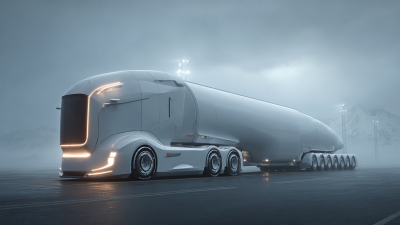
Cryogenic Semi Trailers play a crucial role in the transportation of temperature-sensitive materials. These trailers are essential for industries such as pharmaceuticals, food processing, and liquefied gases. They maintain ultra-low temperatures efficiently while minimizing product degradation.
The design of Cryogenic Semi Trailers is critical. Insulation materials and tank structures are fundamental for optimal performance. Advanced technology enhances safety and efficiency. However, the complexity of these systems can pose logistical challenges. It is vital to reflect on how designs can be improved to meet growing demands.
Effective transportation solutions rely on continual innovation. Understanding the limitations of current Cryogenic Semi Trailer designs is essential for progress. This exploration of various designs offers insights into enhancing operational efficiency and addressing industry needs.
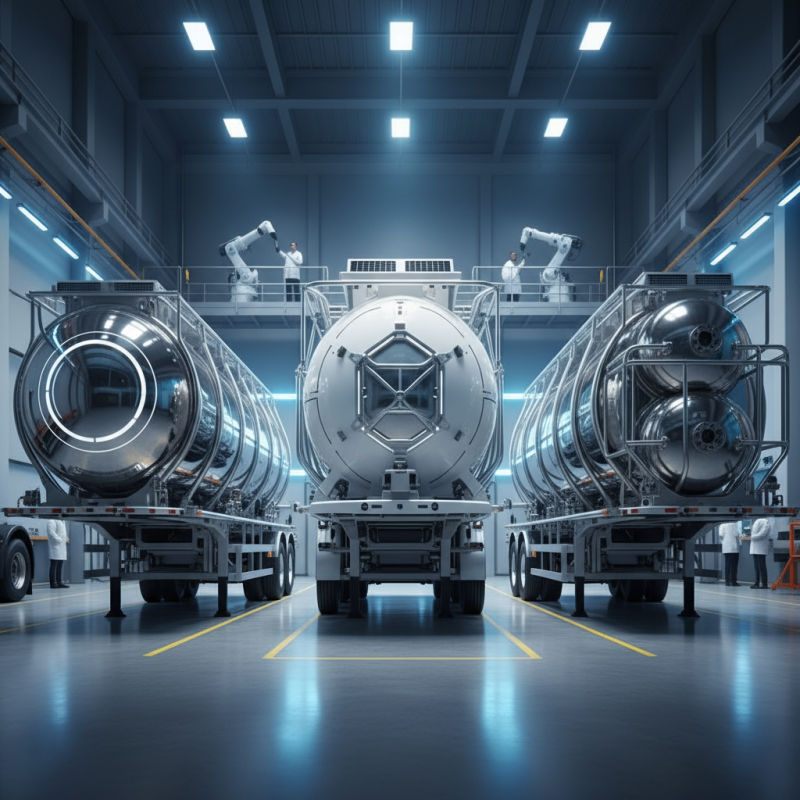
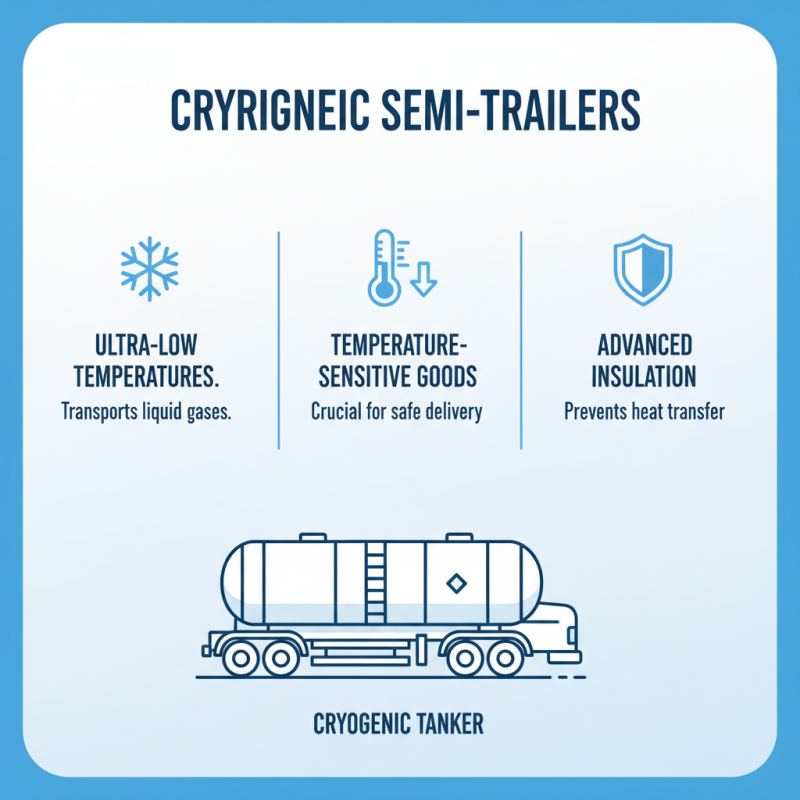
Cryogenic semi trailers play a crucial role in transporting temperature-sensitive goods. These trailers are designed for liquid gases at ultra-low temperatures. Their insulation is key. High-quality materials prevent heat transfer. This ensures safe delivery.
To maximize efficiency, consider the loading features. Many cryogenic trailers offer easy access for quick loading and unloading. This can save time and reduce labor costs. Moreover, the braking system must be reliable. Safety is non-negotiable when transporting hazardous materials.
Tips: Regular maintenance is vital. Inspect the insulation and fittings regularly. Any cracks or damages can lead to temperature loss. Train drivers on handling protocols to enhance safety during transit. Proper training minimizes risks significantly.
The transportation of cryogenic gases presents unique challenges. Various types of cryogenic gases require specific handling and storage conditions. For instance, liquid nitrogen must be kept below -196°C to maintain its state. This temperature is critical for preserving its characteristics during transit.
Another example is liquid oxygen. It poses risks of combustion when mixed with organic materials. Transportation schemes must consider safety protocols to avoid accidents. Designing trailers for these gases necessitates specialized insulation and pressure relief systems. The choice of materials for construction is crucial too. They should withstand extreme cold without cracking or losing integrity.
Maintenance of cryogenic trailers is essential. Regular checks for leaks and structural integrity can prevent failures. Operators need proper training to handle these trailers safely. There can be oversights in adherence to regulations. Miscalculations in load capacity can lead to dangerous situations. Each of these factors requires careful consideration in planning cryogenic gas transport solutions.
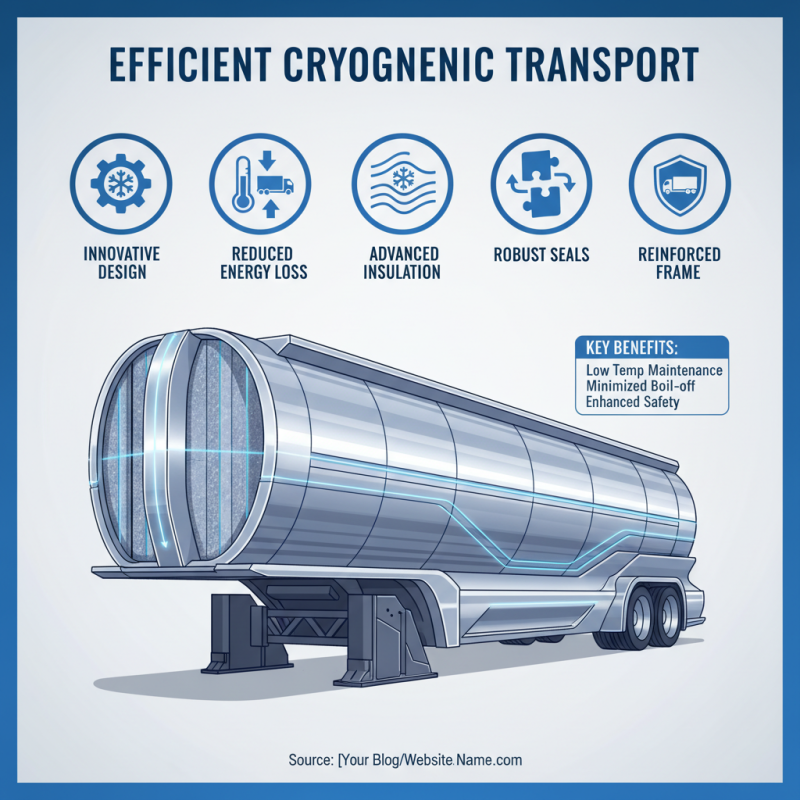
Efficient transportation of cryogenic materials requires innovative design elements. A well-designed semi-trailer can significantly reduce energy loss. Insulation plays a crucial role in maintaining low temperatures. Advanced materials minimize thermal conduction and radiation. Robust seals prevent gas escape, which enhances efficiency. Reinforced frames ensure stability during transit, reducing accidents and damage.
Incorporating lightweight materials is another key factor. This approach improves fuel efficiency, allowing for longer routes without refueling. The trailer's aerodynamics matter too. Streamlined designs cut through the air, reducing drag and conserving energy. However, achieving the perfect balance between weight and strength can be challenging. Some designs may neglect structural integrity for lightness.
Attention to detail is essential. Features such as adjustable suspension systems help in maintaining stability on uneven roads. Adding GPS tracking allows real-time monitoring. These innovative solutions can offer substantial advantages but may require deeper considerations in long-term costs and maintenance. After all, striking a balance between cost and performance is a constant challenge in the industry.
When transporting cryogenic materials, safety is paramount. The design of cryogenic semi-trailers plays a significant role in ensuring compliance with safety standards. These trailers must withstand extreme temperatures while preventing gas leaks. Enhanced insulation is crucial to maintain low temperatures during transit. Regulating temperatures prevents accidents and spoilage.
Each design must meet strict regulations. Temperature monitoring systems are vital. They ensure that the materials remain at safe levels throughout the journey. Another important aspect is the pressure relief systems. These prevent over-pressurization, which could lead to accidents. Operators must be trained to understand these systems thoroughly.
However, challenges remain. Not all designs currently meet these evolving standards. Some trailers still lack adequate safety features. This oversight demands attention. Continuous training for transport personnel can help bridge knowledge gaps. Regular inspections are also necessary to identify potential hazards early. The goal should always be to improve safety practices in cryogenic transport.
| Design Feature | Efficiency Rating | Safety Standard Compliance | Weight Capacity (kg) | Insulation Type |
|---|---|---|---|---|
| Vacuum Insulated Tank | High | ISO 9001 | 20,000 | Multi-layer Insulation |
| Standardized Loading Mechanism | Moderate | CFR 49 | 18,500 | Foam Insulation |
| Cryogenic Safety Valves | Very High | ASME VIII Div 1 | 25,000 | Vacuum Insulation |
| Reinforced Alloy Chassis | High | EN 13445 | 22,000 | Composite Insulation |
| Automated Temperature Monitoring | Excellent | API 653 | 19,000 | Triple Layer Insulation |
As the demand for efficient transport solutions grows, cryogenic semi trailers play a critical role. These trailers are designed for transporting liquefied gases like LNG and liquid nitrogen. According to industry reports, the global cryogenic equipment market is expected to reach $41 billion by 2025. This reflects a strong interest in optimizing transportation systems for these materials.
Emerging technologies are making cryogenic trailers smarter and more efficient. Advanced insulation materials are reducing heat transfer, enhancing product integrity. Data shows that improved insulation can lead to a 30% increase in energy efficiency. This is crucial for reducing operational costs and environmental impact. However, challenges remain, such as the need for regular maintenance to prevent leaks and inefficiencies.
Future designs are likely to incorporate IoT sensors for real-time monitoring. Such advancements could improve route planning and load management. Yet, integrating these technologies isn't straightforward. System failures or data inaccuracies could lead to costly delays. The industry must adapt and refine these technologies to prevent such issues. Continuous innovation is necessary to stay competitive in this evolving market.